
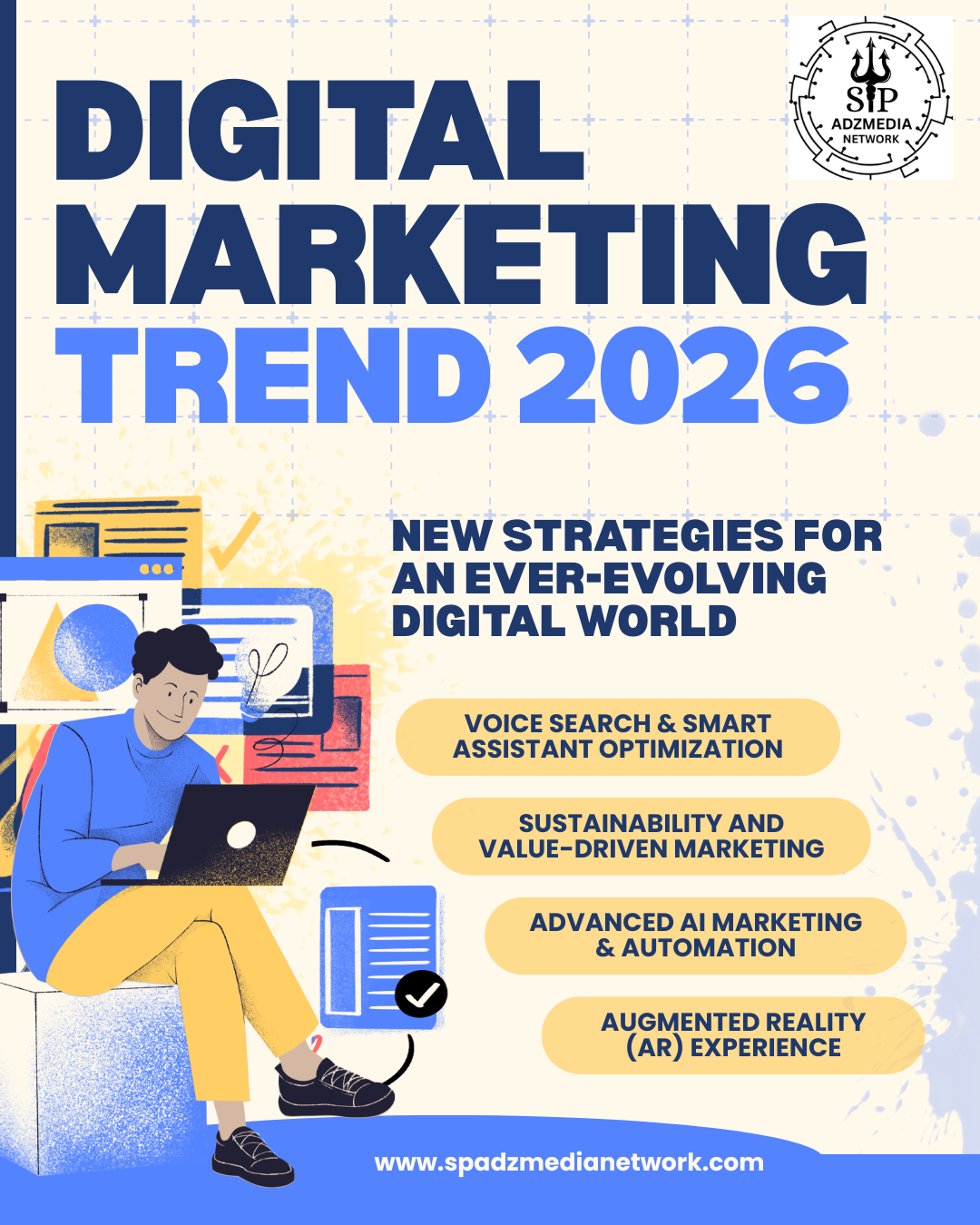
A complete guide to what’s shaping the digital landscape in 2026 — and how your brand can stay ahead.
Introduction: The Changing Face of Digital Marketing
Digital marketing trends never stands still. Every year, the tools evolve, the platforms shift, and the audiences get smarter. But 2026 feels different. We’re standing at the crossroads of AI innovation, content evolution, and human creativity, all blending to create a new era of online marketing.
For businesses and creators, understanding the latest Digital Marketing Trends isn’t just about staying relevant — it’s about staying alive in a hyper-competitive digital world. From AI-powered personalization to voice search and immersive content, this year’s trends are rewriting the rules of brand communication.
Let’s dive deep into what’s changing, why it matters, and how you can future-proof your digital presence.
1. The Rise of AI-Powered Marketing: Smarter, Not Harder
By 2026, Artificial Intelligence (AI) has become the beating heart of most digital strategies. But unlike a few years ago, when AI was just a “buzzword,” today it’s a full-fledged partner in creativity and decision-making.
Marketers now use AI to analyze audience behavior, predict trends, generate ad creatives, optimize SEO, and even chat with customers in real time. The difference lies in how we use it — AI isn’t replacing human marketers, it’s enhancing them.
Real-World Example
Imagine running an ecommerce store. AI tools now automatically segment your audience, recommend products based on browsing habits, and even create custom-written emails for each user. It is akin to possessing a personal marketing assistant who is always awake.
Pro Tip
Use AI to automate what’s repetitive — like analytics, email segmentation, and keyword research — but let human creativity guide storytelling, emotion, and authenticity.
Takeaway: The future of marketing does not revolve around a competition between “AI and humans,” but rather a collaboration of “AI and humans.”
2. SEO in 2026: Optimizing for People, Not Just Algorithms
SEO in 2026 is nothing like it was five years ago. Google and other search platforms have shifted from keyword stuffing to intent understanding. What matters now is whether your content actually answers what the user meant to ask, not just the words they typed.
At the same time, AI-driven search engines like ChatGPT Search, Google SGE (Search Generative Experience), and Perplexity are changing how information is discovered. People are looking for quick, conversational answers — not just a list of blue links.
Key SEO Shifts
Focus on topic depth instead of keyword density.
Optimize for voice search and conversational queries.
Structure your content for AI visibility using schema markup and natural language.
Invest in long-form, human-written blogs that truly solve problems.
Bonus Tip
Create content clusters — main pillar pages supported by subtopics — to build authority in your niche. This structure signals expertise to both users and search engines.
Takeaway: SEO success in 2026 is built on clarity, empathy, and usefulness — not tricks or hacks.
3. Hyper-Personalization: The New Currency of Customer Loyalty
In 2026, your customers expect brands to know them — not in a creepy way, but in a thoughtful, value-adding way. They want emails that feel like one-on-one conversations, not mass blasts. They want product recommendations that actually fit their taste, not random upsells.
That’s where hyper-personalization comes in.
Marketers are now using AI-powered insights, behavior tracking, and real-time analytics to craft personalized journeys across all touchpoints — from ads to emails to landing pages.
What It Looks Like
Dynamic website content that adapts to each visitor.
Personalized video messages or recommendations.
Smart chatbots that remember user preferences.
The Human Angle
Personalization isn’t about data — it’s about connection. It’s your way of saying, “We see you, we understand you, and we’ve made this just for you.”
Takeaway: The more personalized your marketing feels, the more loyal your customers become.
4. Social Media Search: The New Google for Gen Z
One of the biggest Digital Marketing Trends in 2026 is that young audiences don’t start their search on Google anymore — they start it on TikTok, Instagram, and YouTube.
Want to find the best skincare product, restaurant, or travel destination? Gen Z types it into TikTok’s search bar. That shift is forcing marketers to rethink how they show up online.
How to Win in Social Search
Optimize captions and bios with keywords just like SEO.
Use search-friendly hashtags.
Create content that directly answers common questions (“how to,” “best,” “near me,” etc.).
Post authentic, short-form videos that feel human, not corporate.
Why It Matters
Social media platforms are no longer just engagement tools — they’re discovery engines. If your brand isn’t searchable there, you’re invisible to an entire generation.
Takeaway: In 2026, social visibility equals brand credibility.
5. Video Content Still Rules — But It’s Getting Smarter
We’ve been saying “video is the future” for years — and now, it’s the present. But in 2026, how we create and consume video has evolved.
Short-form videos (under 60 seconds) remain the king of engagement. But long-form, story-driven content is making a comeback — especially when it feels authentic. Live shopping, AR filters, and interactive storytelling are redefining what “watching” means.
Emerging Formats
Vertical videos designed for mobile first.
Interactive reels where users can vote or participate.
AI-generated but human-edited content that blends efficiency with creativity.
Best Practice
Don’t chase trends. Create consistent video stories that highlight your brand voice, customer stories, and behind-the-scenes authenticity.
Takeaway: 2026 is the year of interactive storytelling, not just video posting.
6. The Boom of Social Commerce
Gone are the days when social media was just about likes and comments. In 2026, people shop directly from social posts — without ever leaving the app.
Instagram Shops, TikTok Shop, and YouTube Shopping are now mainstream. The “scroll and buy” habit is turning every post into a mini storefront.
How Brands Can Adapt
Enable in-app checkout for seamless transactions.
Use influencer-driven live streams for real-time sales.
Invest in shoppable content — reels, pins, or carousels with product tags.
Why It Works: It reduces friction. The less number of clicks needed from finding a product to making a purchase, the better your conversion rate will be.
Takeaway: In 2026, your social feed is your store window — treat it like one.
7. Content That Feels Real: Authenticity Beats Perfection
Audiences are tired of polished ads and robotic copy. They want authentic, relatable, and raw content that feels real. Whether it’s a brand founder speaking directly to the camera, a customer sharing their story, or a behind-the-scenes moment — honesty builds connection.
Winning Content Types
Story-based blogs and LinkedIn posts
UGC (User Generated Content) from real customers
Micro-influencer collaborations that feel organic
Transparent storytelling about your brand’s journey
Why It Matters
In an age of AI content, authenticity is your biggest differentiator. People buy from brands they trust — and trust comes from truth.
Takeaway: Stop trying to look perfect. Start trying to look real.
8. Interactive and Immersive Experiences
2026 is also seeing the rise of immersive marketing — where audiences don’t just consume content, they experience it.
AR (Augmented Reality) and VR (Virtual Reality) are being used by brands to create memorable, interactive campaigns. From trying on clothes virtually to exploring 3D spaces, brands are turning marketing into entertainment.
Examples
Furniture brands offering AR previews in your home.
Cosmetic brands letting you try shades virtually.
Virtual showrooms and product tours for ecommerce.
Even small businesses can participate by using interactive quizzes, polls, or gamified landing pages.
Takeaway: Don’t just talk to your audience — involve them.
9. Data Privacy and Ethical Marketing
With every new technology comes new responsibility. In 2026, privacy is no longer optional — it’s a core part of brand trust.
People are becoming more aware of how their data is used, and global privacy laws are getting stricter. Marketers who use transparent, ethical data practices will win long-term loyalty.
Best Practices
Clearly communicate how data is collected and used.
Offer easy opt-in and opt-out options.
Focus on first-party data instead of buying lists.
Why It Matters: Consumers reward honesty. When people trust you with their information, they also trust your recommendations.
Takeaway: Ethical marketing isn’t just the right thing — it’s the smart thing.
10. Omnichannel Integration: Marketing That Flows Smoothly
In 2026, customers don’t think in “channels.” They might see your ad on Instagram, read your blog, and then get a follow-up email. To them, it’s one conversation. For you, it should be one unified strategy.
That’s where omnichannel marketing comes in — creating a consistent brand experience across every touchpoint.
How to Build an Omnichannel Presence
Use a Customer Data Platform (CDP) to unify insights.
Keep your tone and visuals consistent everywhere.
Map your customer journey from awareness to retention.
Integrate social media, email, website, and offline touchpoints seamlessly.
Takeaway: When your message feels connected, your audience feels connected too.
11. Voice Search and Conversational Marketing
Smart speakers, AI assistants, and voice search are changing how people find information. By 2026, nearly 60% of searches are voice-based, and that means marketers must optimize for natural, conversational language.
How to Adapt
Focus on question-based keywords (“How can I…”, “Where to buy…”)
Optimize content for local search and quick answers.
Implement chatbots and conversational landing pages.
Takeaway: Write like you talk — that’s the secret to being found in a voice-first world.
12. Sustainability and Purpose-Driven Marketing
Modern consumers want to support brands that stand for something bigger than profit. They look for companies that are sustainable, ethical, and socially conscious.
Examples
Eco-friendly packaging and messaging
Transparent business ethics
Partnerships with social causes
Why It Matters: Purpose isn’t just PR — it’s positioning. Brands that align with values create deeper emotional loyalty.
Takeaway: In 2026, “purpose” sells as much as “product.”
Conclusion: The Future Belongs to Adaptive Brands
If there’s one truth about Digital Marketing Trends in 2026, it’s this — adaptability is everything.
The tools may evolve, algorithms may change, but human connection remains the foundation. Brands that balance technology with empathy, automation with authenticity, and innovation with integrity will lead the new digital era.
So as you step into 2026, ask yourself:
Are you creating content people feel, not just consume?
Are your strategies built for the customer, not just the click?
Also Read :-Best SEO Services in Delhi by SP AdzMedia Network to Skyrocket Your Website’s Ranking
Best Digital Marketing Agencies in Delhi: SP AdzMedia Network Leads the WayBest Digital Marketing Agency In Delhi-SP AdzMedia NetworkTrends In Digital MarketingTop Start Up Companies in Delhi Backlink Creation Services in Delhi Explore our SEO services in Rohini Backlink Creation Services in Delhi AI SEO Optimization E-Commerce SEO 2025: The Ultimate Guide by SP AdzMedia Network For Best Wedding Venues In Delhi
Our Social Media Handles: Instagram Linkedin X Pinterest Blogger YouTube
Leave a Reply