
Table of Contents
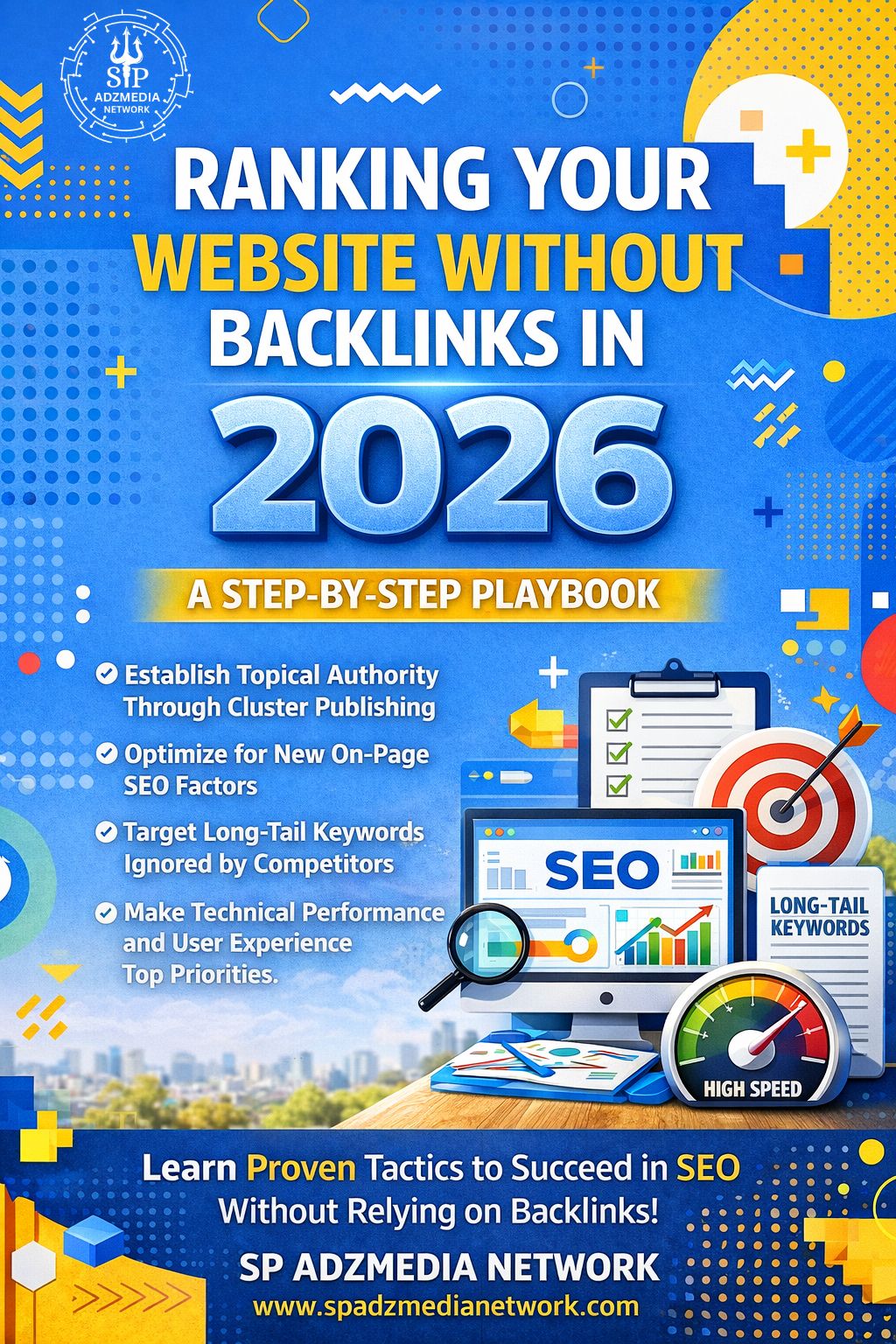
Ranking Your Website Without Backlinks in 2026, Something unusual is happening across search results in 2026. Newer websites with almost no external links are outpacing established domains that spent years accumulating backlink profiles. Niche blogs written by solo creators are sitting comfortably on page one, pulling in steady organic traffic month after month — without a single link-building campaign behind them.
This is not a glitch. It is the result of deliberate changes to how search engines assess content value. The signals that move rankings today go far beyond who is pointing links at your domain. Behavioral data, content depth, page speed, topical focus, and demonstrated expertise now carry enormous weight — and none of them require an outreach email or a link exchange.
This guide walks you through eight concrete strategies that can push your website up the rankings purely on the strength of what you publish and how you present it. No link-building required.
The Real Reason Backlinks Are No Longer a Prerequisite
To understand why non-link strategies work so well now, you need a clear picture of what changed inside Google’s evaluation process. Over the past several algorithm cycles, the search engine has aggressively reduced how much weight it gives to raw link counts — because link manipulation became an entire cottage industry. Paid links, link farms, and private blog networks made the signal unreliable.
What replaced it? A much richer set of signals that are far harder to game artificially. Google now weighs how long visitors stay on a page, whether they scroll through the content or leave within seconds, how often people search for a brand by name, how comprehensively a site covers a given subject area, and whether the people writing the content appear to have real-world knowledge of the topic.
These are signals you can influence directly through your own work. You do not need a third party to validate your page. You need to earn trust from visitors — and Google will take notice.
Tactic One: Establish Topical Authority Through Cluster Publishing
The single highest-impact thing you can do without building links is demonstrate that your website owns a topic area. Not just covers it — owns it. This means publishing a connected web of content that addresses a subject from multiple angles, levels of detail, and user perspectives.
What a Content Cluster looks like in practice.
A properly structured cluster has three moving parts:
• A pillar article that serves as the authoritative hub on a broad topic — thorough, well-researched, and designed to rank for the core keyword phrase
• Supporting cluster articles that go deep on specific subtopics related to the pillar — each targeting a narrower keyword phrase with genuine depth
• A deliberate internal linking system where cluster articles point to the pillar, the pillar links out to clusters, and related clusters reference one another
When a website publishes 15 to 20 tightly connected pieces on a single topic, search engines begin treating that domain as a go-to resource in that space. Rankings tend to lift across the entire cluster — not just the individual articles. Pick one core subject, map out your subtopics, build the pillar first, then fill in the supporting pieces consistently over 60 to 90 days.
Tactic Two: Treat On-Page Optimization as a Science, Not a Checklist
Most websites treat on-page SEO as a quick box-ticking exercise — stuff a keyword in the title, add a meta description, call it done. That approach leaves most of the ranking potential on the table. Treated seriously, on-page optimization is one of the most direct levers you have for moving positions without any external help.
Elements That Carry Real Weight in 2026
• Title tag construction: Your primary keyword should appear naturally within the first 55 characters — not forced, not repeated, just cleanly present alongside a compelling reason to click
• Meta description purpose: Write this for the human reader, not the algorithm. A well-crafted description raises your click-through rate, and CTR feeds directly into ranking signals
• Heading architecture: One H1, supported by H2s for main sections and H3s for sub-points. Each heading should reflect a real question or sub-topic the user cares about — not just a keyword container
• Semantic keyword coverage: Naturally weave in related terms, synonyms, and conceptually connected phrases throughout the piece — this tells the algorithm you cover the topic in full, not just the exact keyword phrase
• Structured data markup: Implement Article, FAQ, HowTo, or Product schema wherever relevant. These do not directly boost rankings, but they unlock rich result formats that dramatically increase click-through rates
Run a page-by-page audit of your most important content. For each one, ask: Does this page answer the query completely? Is the structure immediately scannable? Does every element signal that this is the definitive resource on the subject? If not, fix it before writing anything new.
Tactic Three: Decode What the Searcher Actually Wants
Publishing content around a keyword without first understanding the intent behind it is one of the most common and costly SEO mistakes. Google has become exceptionally precise at detecting whether a page’s content format and depth match what the person searching actually came to find.
Search intent falls into four categories, each demanding a different content approach:
• Informational queries: The person is in learning mode. They want explanations, context, and clarity — not sales pitches. Long-form educational guides perform best here.
• Navigational queries: The person already knows where they are going. Competing for these is rarely worthwhile unless you are the destination.
• Commercial investigation queries: The person is comparing options before committing. Comparison articles, detailed reviews, and ranked lists perform well here.
• Transactional queries: The person has decided to act. Landing pages with clear offers and minimal friction are what this intent demands.
Before writing, open an incognito window and search your target keyword. Study the top five results carefully. What content format dominates — lists, guides, videos, product pages? How long are the top-ranking pieces? What questions keep appearing? Build your content to satisfy that same intent at a higher level of quality and depth.
Tactic Four: Go After Long-Tail Keywords Your Competitors Ignore
A website without an established domain authority has no realistic shot at ranking for broad, highly competitive keyword phrases in any reasonable timeframe. Pouring effort into those terms is a productivity drain. The smarter approach is to sidestep the competition entirely by targeting the specific, longer phrases that most websites overlook.
Long-tail keywords carry three advantages that make them invaluable for sites without backlinks: the competition is dramatically thinner, the searcher’s intent is far more specific which means conversion rates are higher, and a cluster of 20 to 30 well-ranked long-tail articles collectively drives more traffic than a single mid-tail keyword ever could.
Consider the difference in competitive difficulty between these two approaches:
• Targeting “coffee” — tens of thousands of competing pages, dominated by global brands and billion-dollar media sites
• Targeting “how to make cold brew coffee without a grinder at home” — specific, low competition, and written by someone who has actually done it
Stack enough of those specific wins and you build a traffic foundation that grows month over month. As your topical authority develops, you will find your domain naturally climbing for the broader terms too — without ever targeting them directly.
Tactic Five: Make Technical Performance a Non-Negotiable Standard
Content quality gets the attention in most SEO discussions, but technical performance quietly determines whether that content ever gets a fair shot at ranking. A page that loads slowly, shifts visually during load, or responds sluggishly to user interactions sends negative signals to Google — signals that content optimization alone cannot override.
The Three Vitals That Actually Matter
• Largest Contentful Paint (LCP): This measures how quickly the dominant visual element on the page appears to the user. Every 2.5 seconds puts you at a disadvantage. Compress images, serve them in modern formats like WebP, and use a CDN.
• Interaction to Next Paint (INP): This tracks how quickly the page reacts after a user clicks, taps, or types. Heavy JavaScript is the usual culprit. Audit your scripts and defer anything that does not need to load immediately.
• Cumulative Layout Shift (CLS): This captures unexpected visual movement during page load — the jarring experience of text jumping around as ads or images load in. Reserve space for dynamic elements and specify image dimensions explicitly.
Run your key pages through Google PageSpeed Insights every quarter. Treat the results as a priority list, not suggestions. A technically healthy website earns more crawl budget, gets indexed faster, and holds rankings more reliably than a slow site with great writing.
Tactic Six: Engineer the User Experience to Signal Quality
Every time a visitor arrives at your page through organic search, they generate behavioral data. How long did they stay? Did they scroll to the bottom or bail after three seconds? Did they visit a second page, or did they hit the back button and click a competitor’s result instead? Google collects and weighs all of this, and it’s important.
Designing for strong behavioral signals means paying attention to these specific elements:
• Opening paragraphs: The first 100 words determine whether a visitor stays or leaves. Lead with the answer, the insight, or the tension — never with background filler or lengthy preamble
• Visual scannability: Short paragraphs, descriptive subheadings, and strategic use of visuals allow readers to navigate quickly — reducing exits from visitors who are not ready to read every word
• Engagement mechanisms: Embedded tools, expandable FAQ sections, comparison tables, and checklists give readers reasons to interact with the page rather than passively skim and leave
• Internal journey design: End every article with a clear next step — a related guide, a deeper resource, or a relevant tool. Visitors who move to a second page signal quality far more strongly than those who read and exit
When visitors stay longer, engage more deeply, and continue through your site, you generate the behavioral profile that Google uses to separate genuinely useful pages from superficially optimized ones.
Tactic Seven: Build E-E-A-T Into the Structure of Your Site
E-E-A-T stands for Experience, Expertise, Authority, and Trustworthiness. It is Google’s quality framework — the set of characteristics its human quality raters look for when evaluating whether a site deserves prominence in search results. You do not need backlinks to score well on these dimensions. You need to build a site that feels credible, transparent, and genuinely knowledgeable.
Practical steps that strengthen E-E-A-T signals:
• Author profiles with substance: Every byline should link to a page that explains the author’s background, credentials, and real-world experience with the subject matter. Thin or anonymous authorship erodes trust.
• A transparent About page: Tell the story of why this site exists, who runs it, and what makes the content worth reading. Generic corporate copy signals nothing. Specific, honest origin stories do.
• Outbound links to credible sources: Citing high-quality external references when making factual claims tells both readers and search engines that you prioritize accuracy over appearing self-sufficient.
• Trust infrastructure: A working contact page, a clear privacy policy, terms of service where relevant, and HTTPS security are baseline signals that Google’s quality guidelines specifically look for.
• Content update discipline: High-quality sites revisit their most important articles regularly. Adding a visible last-reviewed date and actively refreshing statistics and recommendations signals ongoing investment in accuracy.
Tactic Eight: Position Your Content for Featured Snippets and Zero-Click Visibility
The traditional first-position result is no longer the most visible spot on many search pages. Featured snippets, People Also Ask boxes, and knowledge panels often appear above standard results — and they are won entirely through content formatting, not link authority.
To become the source Google pulls for these premium placements, you need to think about how your content would look extracted and displayed in a small box. Concise, direct answers structured immediately below a question-format heading have the highest probability of being selected. Numbered processes, comparison tables, and tight definition paragraphs of around 50 words are the formats Google gravitates toward most consistently.
Practical formatting habits that target snippet placement:
• After each H2 or H3 that poses a question, write a clean 40 to 60-word direct answer — before expanding into the full explanation below it
• Use numbered lists for any process with sequential steps — these are a reliable snippet magnet for how-to queries
• Include a dedicated FAQ section near the bottom of long-form content — each question and answer pair becomes a candidate for its own People Also Ask placement
A featured snippet win puts your site at the very top of the page for a query — and achieving it requires zero backlinks. It is purely a content and structure game.
Closing Thoughts: What Ranking Without Links Actually Demands
Let’s be direct: backlinks are not worthless. A well-earned link from a credible domain still carries weight. But the idea that you cannot rank meaningfully without them is one of the most persistent myths in digital marketing — and in 2026, the evidence against it is everywhere.
Every site that is winning organically without a heavy link portfolio is doing the same fundamental things well. They chose a topic and went deep rather than broad. They wrote for the person searching, not for the algorithm crawling. They made their site fast and easy to navigate. They demonstrated that real people with real knowledge created the content. Every 2.5 seconds puts you at a disadvantageAnd they structured everything so that Google could extract and present their answers effortlessly.
None of those things require you to send a single outreach email. They requpaying attention to these specific elements:ire consistent effort, editorial discipline, and a genuine commitment to giving visitors something worth finding. That is the new path to page one — and it is more accessible than the link-building playbook ever was.
Start with one cluster. Optimize every page you publish. Match intent before you target keywords. Make the experience fast and frictionless. Build a site that looks like it was made by experts. Format answers so Google can feature them. Do those six things consistently, and you will not need to wait for someone else to link to you.
Yeh 15 SEO-optimized FAQs hain jo aapke blog “Ranking Your Website Without Backlinks in 2026: A Step-by-Step Playbook” ke liye perfect rahenge. Yeh FAQs Google ke People Also Ask (PAA) aur long-tail search queries ko target karte hain.
FAQs – Ranking Your Website Without Backlinks in 2026
1. Can a website rank on Google without backlinks in 2026?
Yes. In 2026, websites can rank without backlinks if they have strong topical authority, excellent on-page SEO, high-quality content, and good user experience. Search engines now rely more on content relevance, search intent, and site performance.
2. Why are backlinks becoming less important for SEO?
Backlinks are still useful, but modern search algorithms focus more on user behavior signals, topical authority, and content quality. This means websites can rank well by creating helpful content and optimizing technical SEO.
3. What is topical authority in SEO?
Topical authority means covering a subject in depth through multiple related articles. When a website publishes comprehensive content clusters around a topic, search engines consider it a trusted source.
4. What is a content cluster strategy?
A content cluster strategy involves creating a pillar page that covers a broad topic and multiple supporting articles that explore subtopics. These pages are interlinked to improve SEO and topical authority.
5. How does search intent affect SEO rankings?
If your content matches the user’s intent (informational, transactional, or navigational), it has a higher chance of ranking in search results.
6. Are long-tail keywords important for ranking without backlinks?
Yes. Long-tail keywords are less competitive and highly specific. Targeting them allows smaller websites to rank faster without relying on backlinks.
7. What are the most important on-page SEO factors in 2026?
Key on-page factors include optimized title tags, clear headings, semantic keywords, internal linking, structured data, and well-written content that directly answers user queries.
8. What technical SEO factors matter most today?
Important technical SEO factors include fast page speed, mobile-friendly design, clean website architecture, proper indexing, and secure HTTPS connections.
9. What are the Core Web Vitals that impact rankings?
The three most important Core Web Vitals are:
Largest Contentful Paint (LCP) – loading speed
Interaction to Next Paint (INP) – responsiveness
Cumulative Layout Shift (CLS) – visual stability
10. How does user experience influence SEO rankings?
Search engines track engagement signals like bounce rate, time on page, and click-through rate. A better user experience can improve these signals and boost rankings.
11. What does E-E-A-T mean in SEO?
factors in optimizing a website’s Search Engine Optimization(s) ranking. When a web page provides consumers/respective audiences with content that exemplifies these qualities, they will naturally rank well.
12. Can small websites compete with large brands in SEO?
Yes. By targeting niche topics, long-tail keywords, and providing high-quality content, small websites can compete with large brands even without strong backlink profiles.
13. What are featured snippets and why are they important?
Optimizing your content(titles, descriptions and images) for featured snippets can enhance visibility and generate additional traffic to your website without needing to increase the amount of backlinks back to your site.
14. How long does it take to rank a website without backlinks?
It typically takes 3 to 6 months depending on keyword competition, content quality, and website authority. Targeting low-competition keywords can speed up the process.
15. What is the best SEO strategy for ranking without backlinks?
The best strategy includes creating topical content clusters, optimizing on-page SEO, targeting long-tail keywords, improving technical performance, and building trust through E-E-A-T signals.
Also Read :-Best SEO Services in Delhi by SP AdzMedia Network to Skyrocket Your Website’s Ranking
Best Digital Marketing Agencies in Delhi: SP AdzMedia Network Leads the WayBest Digital Marketing Agency In Delhi-SP AdzMedia NetworkTrends In Digital MarketingTop Start Up Companies in Delhi Backlink Creation Services in Delhi Explore our SEO services in Rohini Backlink Creation Services in Delhi AI SEO Optimization E-Commerce SEO 2025: The Ultimate Guide by SP AdzMedia Network SEO vs AEO vs GEO Latest Google Ads Strategy for 2026 Best Startup Ideas for Business in 2026 — The Ultimate Guide How to Start a Print-on-Demand T-Shirt Business in 2026 (Powered by AI Innovation) 200+ Travel Blog Comment Sites 2026 Local SEO Services by SP AdzMedia Network Top AI Startup Ideas in India 2026 Local SEO Services by SP AdzMedia Network YouTube SEO in 2026 Ranking Your Website Without Backlinks in 2026
Our Social Media Handles: Instagram Linkedin X Pinterest Blogger YouTub
Leave a Reply